
Summary
Understanding how long do people stay in memory care helps families plan ahead with confidence rather than uncertainty. Length of stay varies widely based on individual circumstances, but knowing the key factors can guide your decision-making.
- Average memory care stays range from two to four years, though individual experiences vary significantly based on dementia type, age at diagnosis, overall health, and stage at move-in
- Dementia progression differs by type—Alzheimer's disease, vascular dementia, and Lewy body dementia each follow their own timeline, with earlier moves often resulting in longer residencies
- Memory care typically unfolds in three phases: settling in, a middle phase with specialized programming, and a final phase focused on comfort and dignity
- Choosing a community offering multiple levels of support allows residents to transition smoothly without leaving familiar faces if care needs increase
- Quality of life at every stage—through meaningful activities, home-style meals, and person-centered care—matters more than fixating on timeline expectations
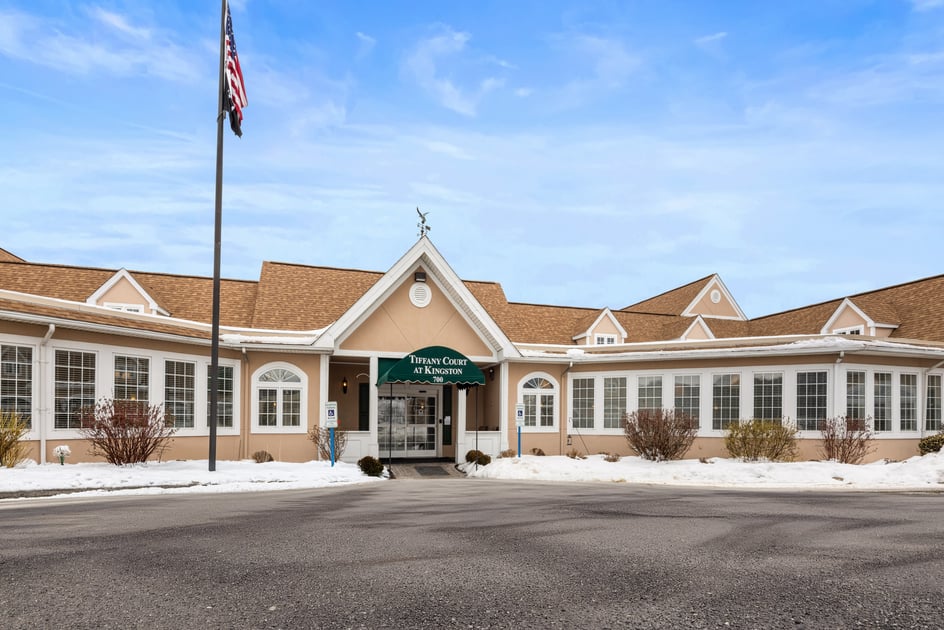
When families start looking into memory care, one question comes up again and again: how long do people stay in memory care? There’s no single answer. Every person’s experience with Alzheimer’s disease or another dementia follows its own path, and knowing what shapes memory care length of stay helps families plan with care rather than guesswork. Tiffany Court at Kingston in Kingston, PA, put together this guide to help.
Industry estimates often put the average stay at two to four years, though some residents stay much longer and others need a shorter time. The type of dementia, age at diagnosis, overall health, and stage at move-in all play a part.
Factors That Influence How Long People Stay in Memory Care
Several things affect memory care length of stay:
- The type of dementia. Alzheimer’s disease, vascular dementia, and Lewy body dementia each follow their own pattern
- The stage at move-in. Earlier moves often mean longer residencies
- Physical health and age at diagnosis, which influence how quickly dementia progresses
- How each person responds to specialized programming
Someone with early-stage Alzheimer’s may do well in memory care for many years, while other forms of dementia can progress faster. Families who choose memory care earlier often see their parent benefit from structured programming for longer. At Tiffany Court at Kingston, GLOW® Memory Care builds each resident’s days around their own life story, legacy, and preferences rather than a one-size-fits-all schedule.
Understanding Dementia Progression in Memory Care
Dementia usually moves through several stages, and memory care communities adjust support at each one:
- Early stages: residents often take part in social programs, handle many daily tasks on their own, and form real connections with neighbors
- Moderate stages: residents need more help with personal care, medications, and routines, with dignity and quality of life kept at the center
- Later stages: residents need full assistance with daily living, which team members provide with patience and skill
Team members adjust support as needs change.
Stages of Memory Care Residency
The stages of memory care residency tend to unfold in three phases:
- Settling in: the first several weeks, when the team works closely with family to learn preferences and build trust
- The middle phase: the longest stretch, when residents benefit from specialized programming, meaningful engagement, and support that adjusts as needs change
- The final phase: the focus shifts to comfort, dignity, and quality of life, and some communities partner with hospice when appropriate
Planning for the Full Continuum of Care
Knowing how long memory care lasts helps families prepare emotionally and financially. Many communities share pricing openly and help families sort through long-term care insurance, veterans benefits, and other assistance programs; 7 practical ways to pay for senior living is a good starting point.
Having those conversations early reduces stress later. It also helps to choose a community with more than one level of support. Tiffany Court at Kingston offers both Personal Care and GLOW® Memory Care, so a resident can move to a higher level of support without leaving familiar faces, and couples with different needs can stay close. Families can compare living options to see how the two fit together.
Focusing on Quality of Life at Every Stage
Practical planning matters, but the heart of memory care is making each day as good as it can be. Good communities create settings where residents feel joy, keep their dignity, and feel valued wherever they are in the progression. At Tiffany Court at Kingston, that looks like home-style meals with tableside service, daily programs led by a full-time director, and outings matched to residents’ interests and mobility.
Rather than fixating on memory care timeline expectations, many families find it easier to stay present and flexible. Regular conversations with the team, a seat at the table during care planning, and celebrating small wins all help. Memory care offers a supportive setting where people living with dementia can thrive, surrounded by professionals who understand their needs at every stage.
Plan with Us
Whatever stage your family is at, the team at Tiffany Court at Kingston can walk you through what GLOW® Memory Care looks like day to day and help you plan for what comes next. Schedule a personalized tour of our Kingston, PA, community to see it for yourself.